
The GCC Effect: How Global Capability Centers Are Rewriting India’s Talent Story

From skill-first hiring to compressed skilling timelines, the rules of workforce planning in India are changing fast — and Global Capability Centers are a defining force behind it.
The Broader Indian Talent Story
India’s workforce narrative extends well beyond any single hiring trend. A large, young, increasingly digitally fluent population continues to enter the workforce each year, but the nature of employability itself is changing. Employers are moving from degree-first to skill-first hiring, placing growing weight on demonstrable capability — certifications, project portfolios, and applied skill tests — over pedigree alone. Hybrid and remote work, normalized over the past several years, has also decoupled talent from geography: organizations increasingly hire the best-fit candidate regardless of city, and professionals in Tier 2 and Tier 3 cities are emerging as a serious, cost-effective, and often underutilized talent pool.
At the same time, the half-life of technical skills is shrinking. What was current two years ago can be outdated today, particularly in technology-adjacent roles. This has made continuous upskilling — not one-time onboarding training — a business necessity, and has blurred the line between ‘recruitment’ and ‘training’ as standalone functions. Organizations that treat talent acquisition and capability building as a single, continuous pipeline are outperforming those that treat them as separate, sequential events.
Compliance and structure are also becoming non-negotiable. Statutory requirements, workplace policy frameworks, and increasingly formal HR processes mean that even fast-growing, founder-led companies need professional rigor in how they hire, onboard, and retain — rigor that many high-growth organizations simply do not have the bandwidth to build in-house at speed.
Global Capability Centers: A Defining Force
India’s workforce story is being actively rewritten by the accelerated growth of Global Capability Centers (GCCs). What began as offshore back-office extensions has evolved into strategic hubs housing product development, AI/ML research, engineering, and enterprise functions for global organizations. For companies like LDC, this shift represents both a market signal and an opportunity.
- Scale of hiring: GCCs are among the largest consumers of specialized technical and functional talent in India today, creating sustained demand across engineering, AI, data, and enterprise functions.
- Capability-first hiring: Unlike traditional offshore models, GCCs hire for capability and readiness from day one, placing pressure on the surrounding talent ecosystem — recruiters, trainers, and consultants — to deliver workforce-ready professionals rather than raw headcount.
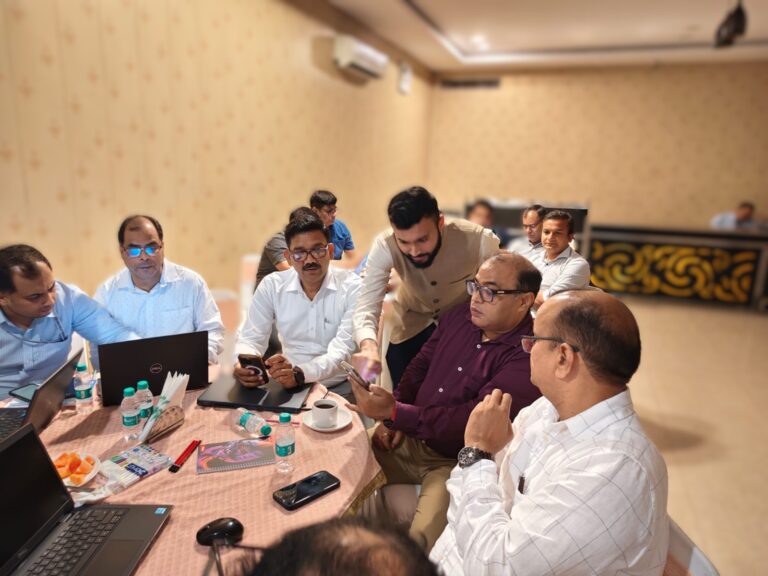
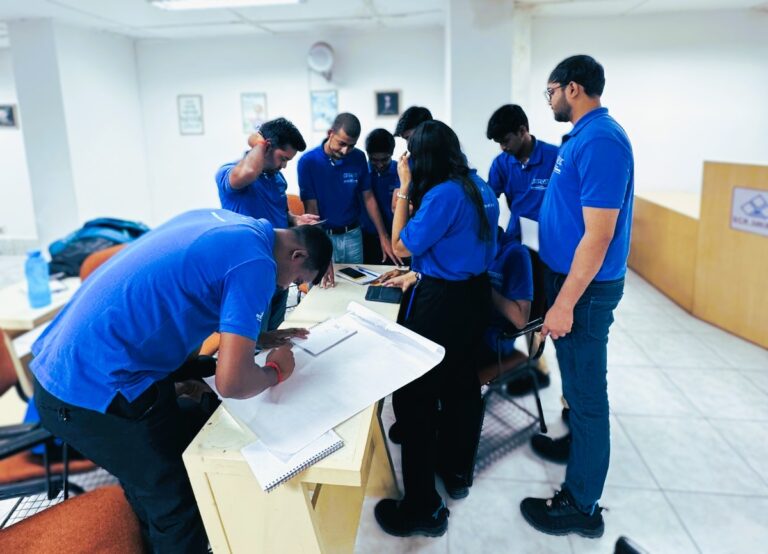
- Compressed skilling timelines: GCCs expect new hires to be productive faster, increasing dependence on structured training partners who can rapidly close capability gaps — precisely the kind of batch-wise, hierarchy-spanning training LDC has delivered in engagements such as Synokem Pharma.
- Talent mobility and competition: As GCCs expand beyond Tier-1 into Tier-2 cities, they compete directly with domestic enterprises and IT services firms for the same specialized talent pools — intensifying the need for strong employer branding, structured recruitment partners, and internal capability-building programs to retain talent.
LDC’s Workforce Philosophy
LDC’s approach to talent is built around three layers that must be addressed simultaneously: sourcing (recruitment of full-time and specialized project talent), building (structured, hierarchy-wide training), and retaining (capability growth paths that keep high-potential employees engaged). Our recruitment work with organizations like L&T EduTech and Loomcrafts, combined with large-scale training engagements such as DCM Shriram and Synokem Pharma, positions LDC uniquely to support clients across this entire workforce lifecycle — whether they are a GCC scaling rapidly, an enterprise competing for the same talent, or an organization building internal centers of excellence.